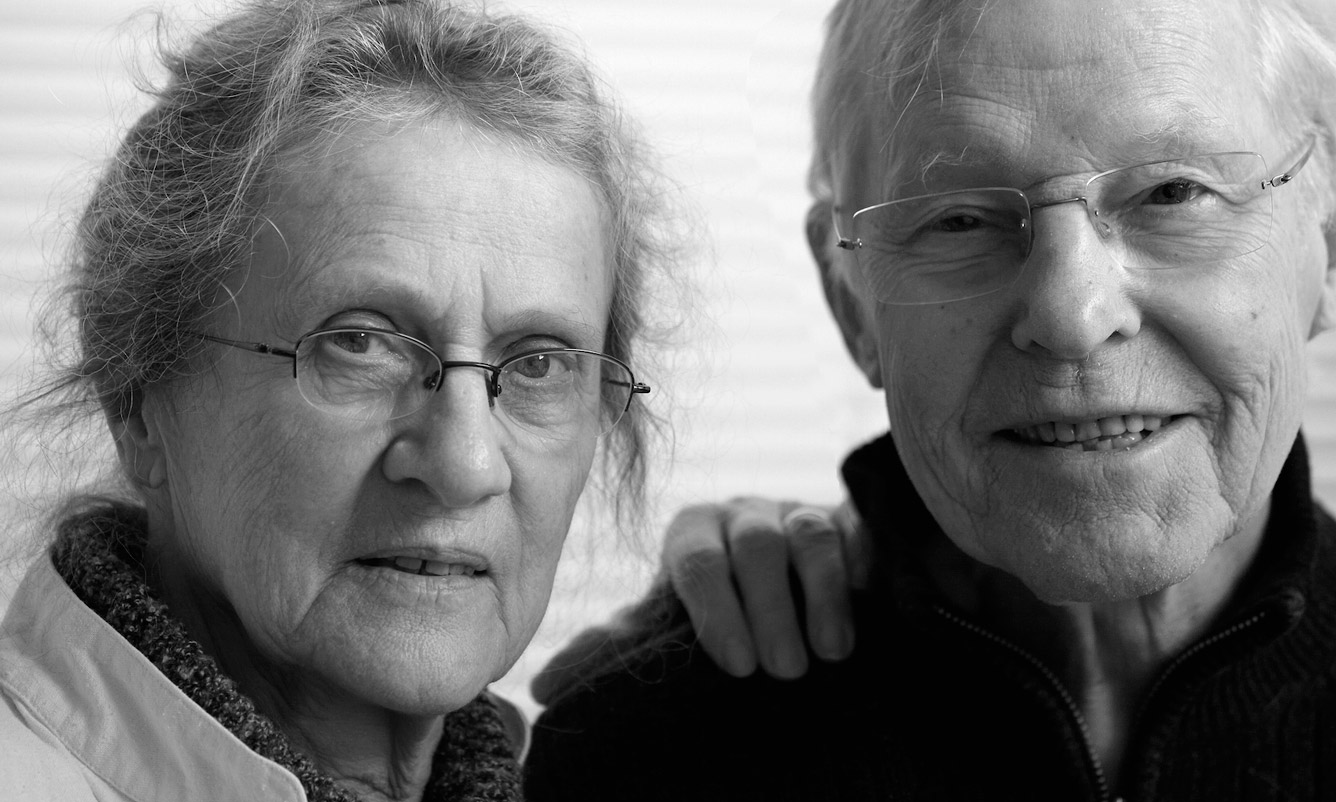
Inger & Johannes Exner
p
Why this website?
Inger Exner, January 2018
Although all realized buildings can be experienced physically, I wanted there to be a comprehensive online overview of all our completed works, divided into categories, as well as information about the projects that were never completed.
To whom?
For those who are interested. And we have found that there are some – many – who are. Both people with a general interest as well as architects and architecture students. Here everyone can access photos all our buildings and perhaps be inspired to experience them in person. (For this purpose you’ll find a map of Denmark with information about the location of every building, for study and excursions.)
Also, I wanted to have a bird’s-eye view of the collection for myself—a box containing our lives, the wonderful blocks we have left behind. This way, future generations are able to seek them out.
How to approach a task:
You start with a case, a name, a site, the location. Rural or surrounded by buildings. A building site, a purpose, a program, finances, a developer, surroundings, neighbors, nature. A question of size – for example, the royal funeral, Frederik IX’s tomb, in relation to the towers and spires of Roskilde Cathedral. Or Præstebro Church, which had two ‘spires’ in the sketch. They looked ridiculous next to the tall buildings of Herlev Hospital. So we cut them off.
We did not achieve our architectural results overnight. There had to be meaning in the things we do, a connection with history and the present. In-depth preliminary studies and speculation, both functional and in other areas. Intellectually, spiritually, and quite down-to-earth and concrete. All buildings, all works, share a connection, a common core. They have an origin, a meaning. It must bring joy to society, to people. It must be for the good of them – an encouragement.
The foundation:
Johannes grew up in a clergy house. After graduating in 1954, he was employed by Vilhelm Lauritzen and then by Mogens Koch. He participated when Mogens Koch established a new programme for training restoration architects at the Royal Danish Academy of Fine Arts in Copenhagen. In 1965, Johannes was appointed Associate Professor in Restoration and Architectural History at the new School of Architecture in Aarhus.
Johannes was very engaged with each of his students. He was a passionate teacher. Perhaps he was more drawn to this task than that of raising children. His students were his life’s work.
My background was not far from Johannes’. My father was an engineer and manufacturer, my mother was more spiritual. She was very devout, we were part of church circles. I knew nothing about architecture back then, first and foremost, I drew. I still do.
I graduated from the School of Architecture in 1954. I worked with design at Akton Bjørn and Sigvard Bernadotte, what today would be called industrial design. Here I worked I worked very detail-oriented.
Johannes conducted thorough research among architects and theologians in 1959-65 in preparation for the book Kirkebygning og Teologi (Church Building and Theology), which his father, Provost Johan Exner, had initiated. This group included wise theologians and priests, Catholic, Orthodox and Protestant, church historians, architects, organ builders, organists, artists, archaeologists and museum curators, all of whom were knowledgeable about church history. Johannes learned a great deal from them.
Although we could criticise Johan Exner for being old-fashioned in relation to new architecture, he was nevertheless a stepping stone for our practice. While we were building our first church, St. Clemens Church in Randers, we were also commissioned to restore old churches throughout the country. Johannes drove around supervising the work, thereby learning a great deal about restoration methods himself.
Stories:
Our architecture is not mainstream. It is special. We have no style, we do not imitate any fashion. It will be exciting to see how our cube churches will be viewed in the future. People said that the Nørrelandskirken was imposing, like a cathedral. In reality, they were modest churches.
Fights, church council, our craftsmen…
At an anniversary celebration in Islev, with many people gathered, a bricklayer gave a speech. He was the one who had built the altar, and he spoke wholeheartedly. That was a speech we should have had.
We visited Nørrelandskirken, where we met a young priest who told us how well it worked.
A city councillor from Kolding was one of our supporters when we were fighting. Not long ago, she called me and explained how significant and positive a time in her life it had been.
We have had many good building developers, and several became our friends. In that way, we have had a very positive life. Even though we feel we have been busy, it has still been wonderful. It has been a good life.
When people see something in our works:
Thank you to everyone who has taken an interest in our architecture and buildings. It means a lot to us. This is our way of saying thank you for everything.
These are people who care about the church and, above all, people who understand cultural heritage. They are pensioners who have spent their retirement studying a whole range of churches out of interest, even though they have other professions. Letters from America, an architect who had discovered that Gug Church was fantastic, and an engineer who had seen the structures at Koldinghus. A letter from two actresses, Malene Schwartz and Lone Hertz, about Sædden Church, “if I were to get married…”.
It is both architects and other people who are captivated by certain spaces, who see something beautiful in them and allow themselves to be influenced, who feel something—that is the spirit of it. It is of great joy.
We have lived long lives. Johannes is dead. I still have my wits about me. I myself enjoy seeing the buildings. There are none that I would prefer over others. We did our best with the opportunities available. Of course, there is always a difference between the earliest and the latest projects.
Inger Exner, January 2018
Postscript:
The material was collected from 2015 to 2018—starting the same year Johannes died — by Karen Exner and Inger Exner, while Inger still remembers the studio’s 60-year history dating back to the 1950s.
This website is not perfect. Firstly, there is a huge amount of material from six decades, and secondly, much of the material has been handed over to various institutions, such as the Royal Library, the Køge Sketch Collection, the Business Archives in Aarhus, and others. In addition, the quality of the material varies, and some factual information is incomplete, but the website will be improved as far as possible and as time allows. The website is not intended to be a substitute for the physical archives, but rather a supplement to them.
In addition to images from Inger and Johannes Exner’s image collection, Inger and Johannes Exner’s family photos, Johannes Exner’s slide collection, Exner’s Design Studio and Karen Exner, the following photographers are to be credited for the images on the website:
Asbjørn Haslov, Poul Ib Henriksen, Ernst Kallesøe, Søren Kuhn, Jens Lindhe, Bjarne Lippert, Aage Lund, Ole Meyer, Thomas Mølvig, Poul Pedersen, Keld Helmer Petersen, Ib Rasmussen, Sune Sundahl and Thomas Bo Jensen, who kindly provided us with all the material he collected for the book ‘Inger and Johannes Exner’.
Editor Karen Exner
Front page photo: Thomas Mølvig
The website was created in collaboration with Hilsen IT by Peter Højlund Palluth.
The website was first launched in early 2018. The website now exists in an improved and updated version. Kindly supported by the Danish Arts Foundation and Aage & Johanne Louis-Hansens Foundation.

