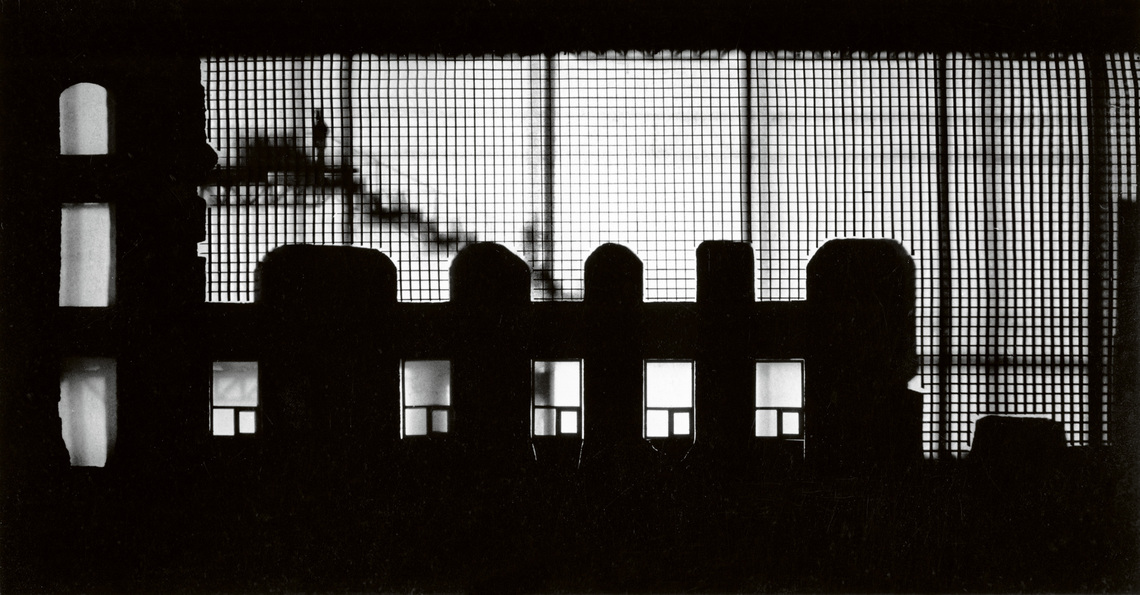
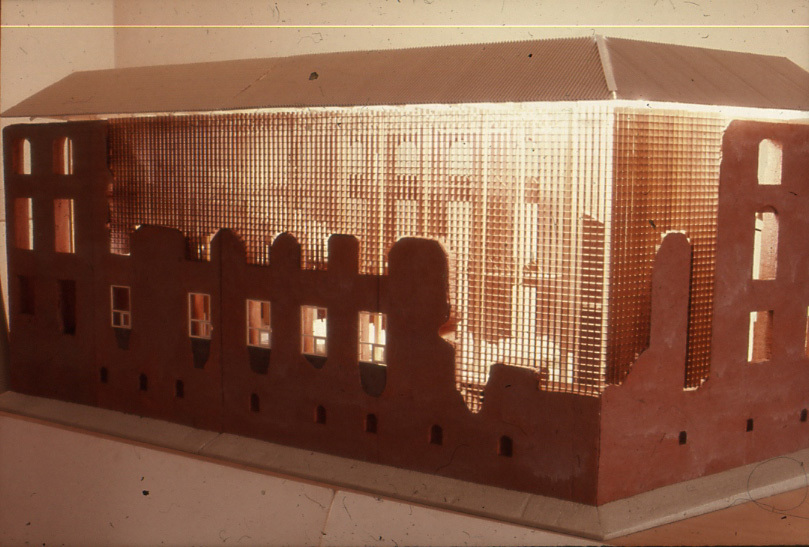
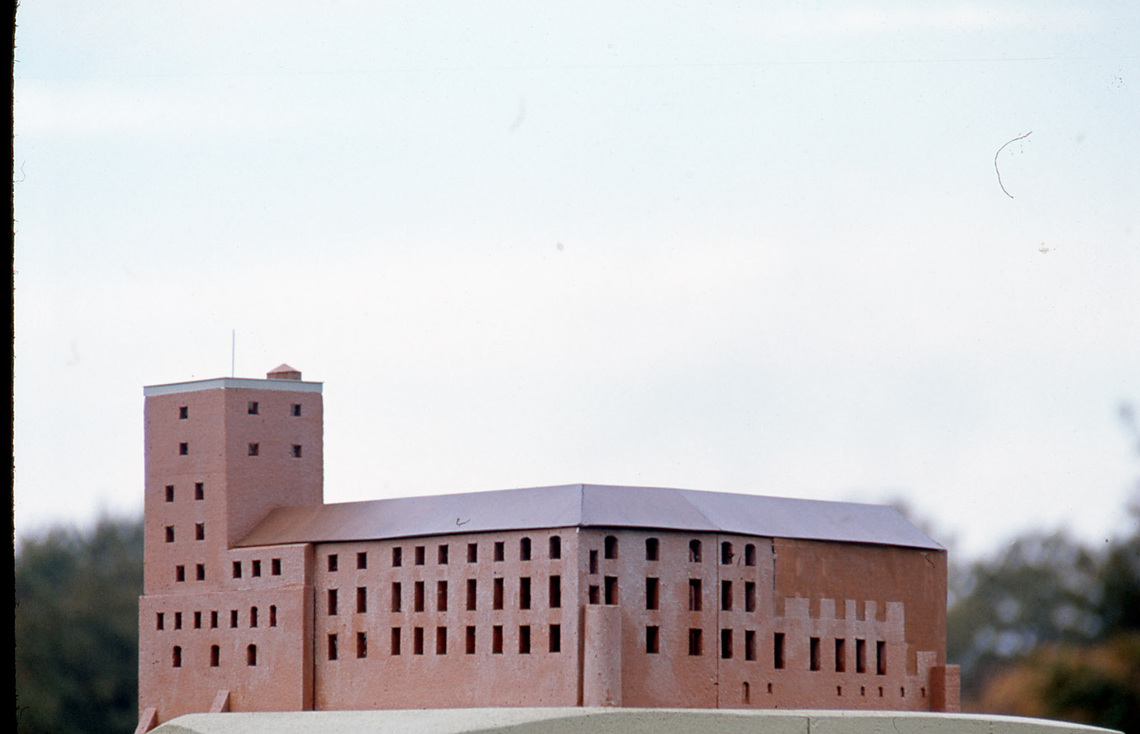
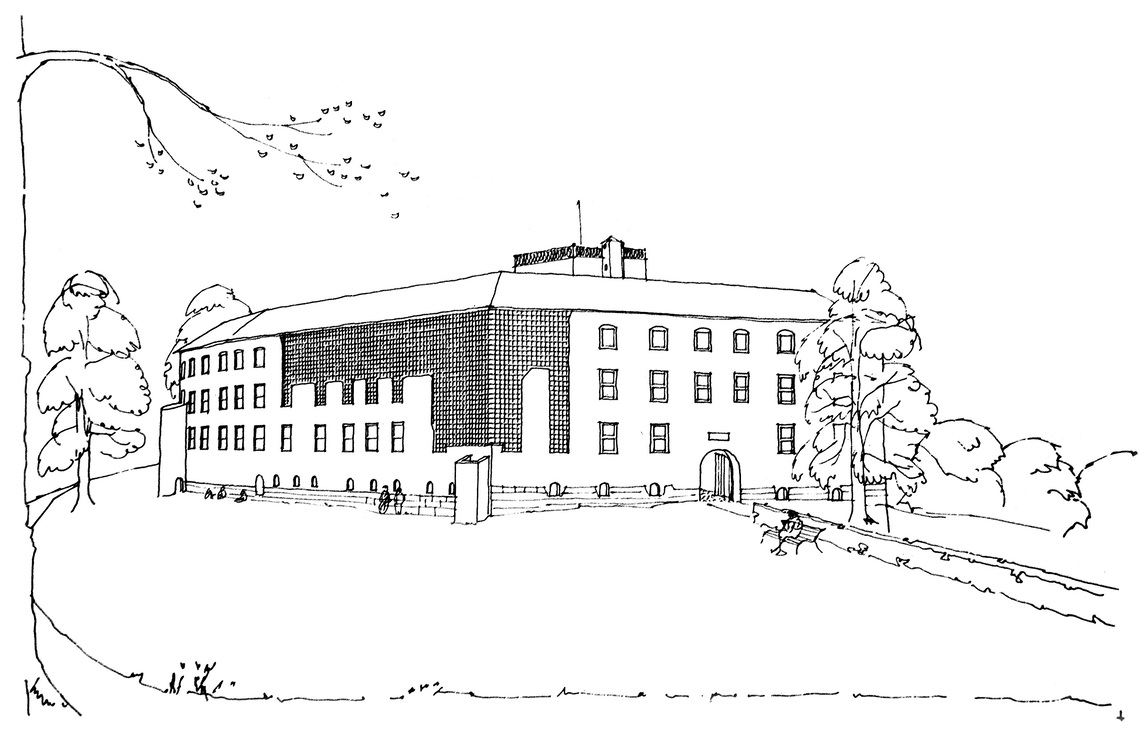
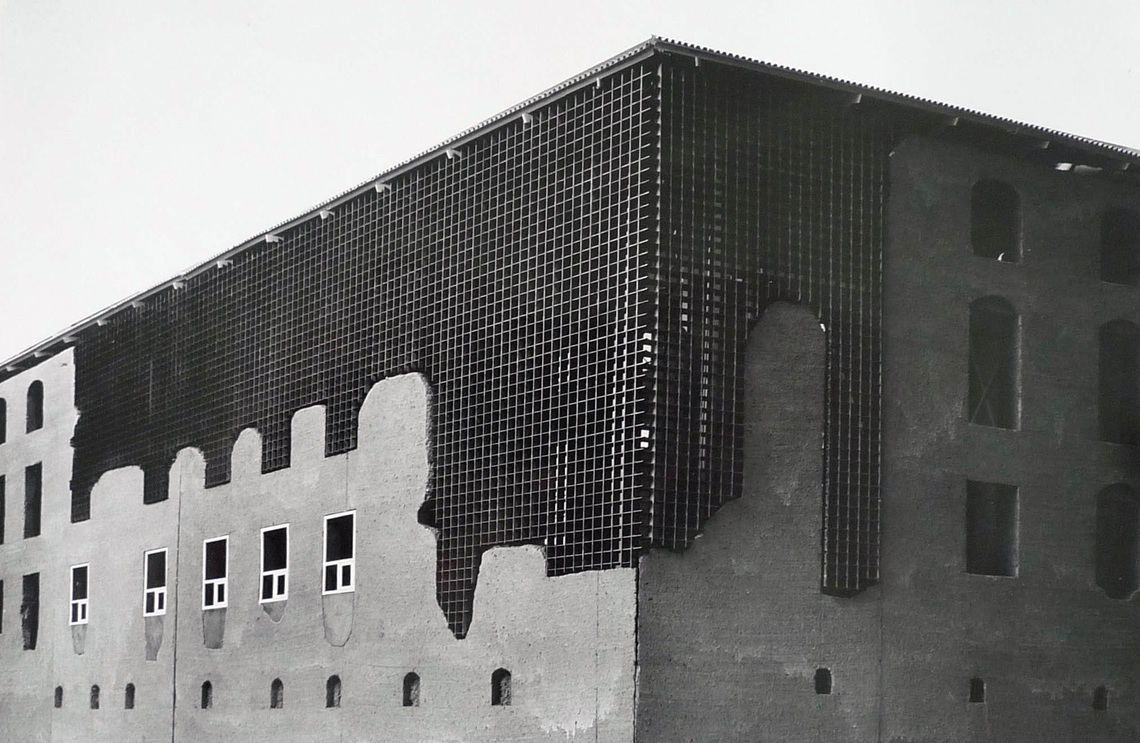
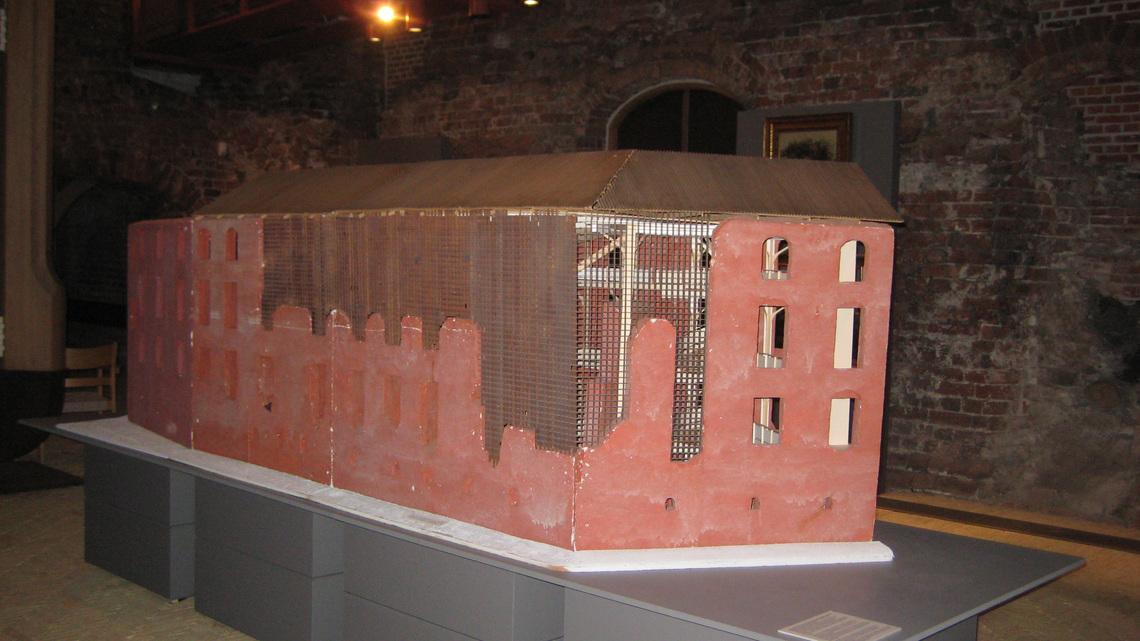
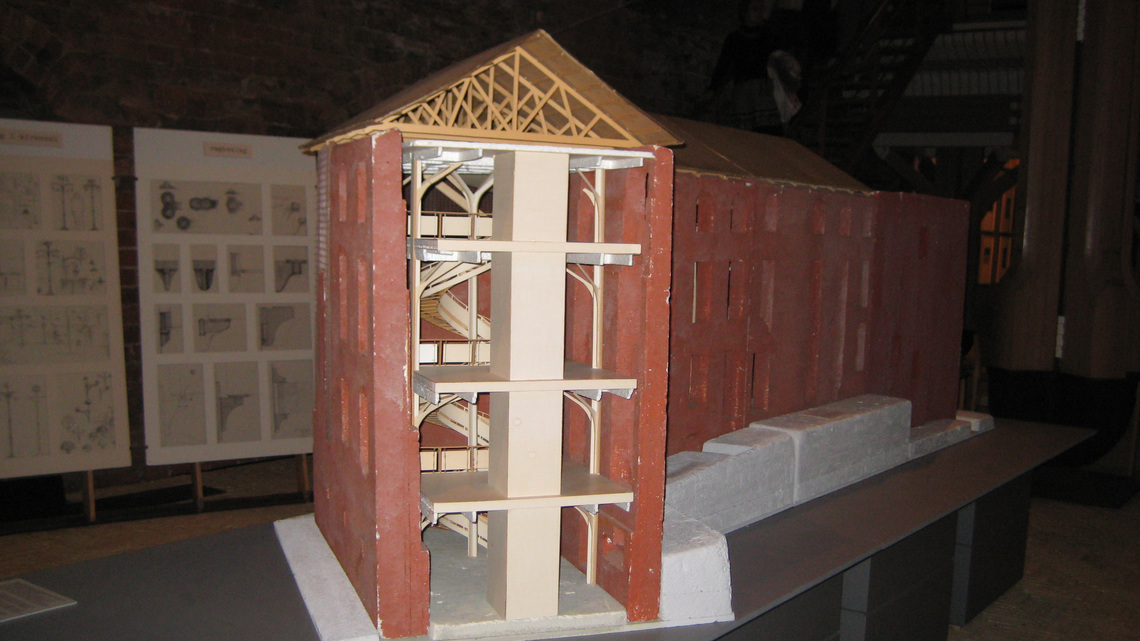
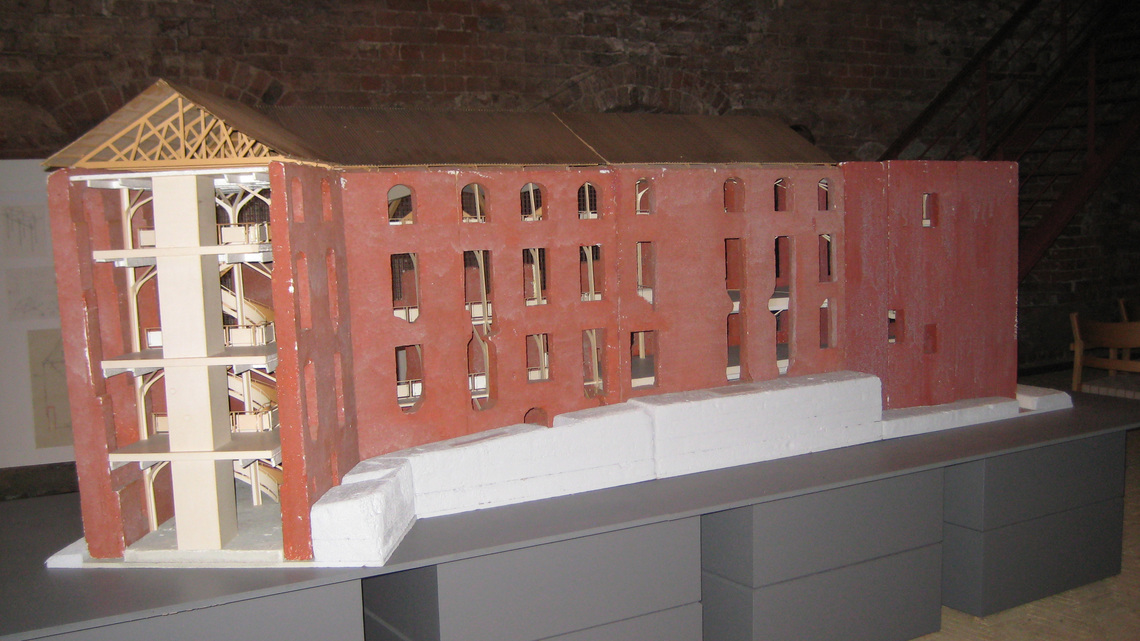
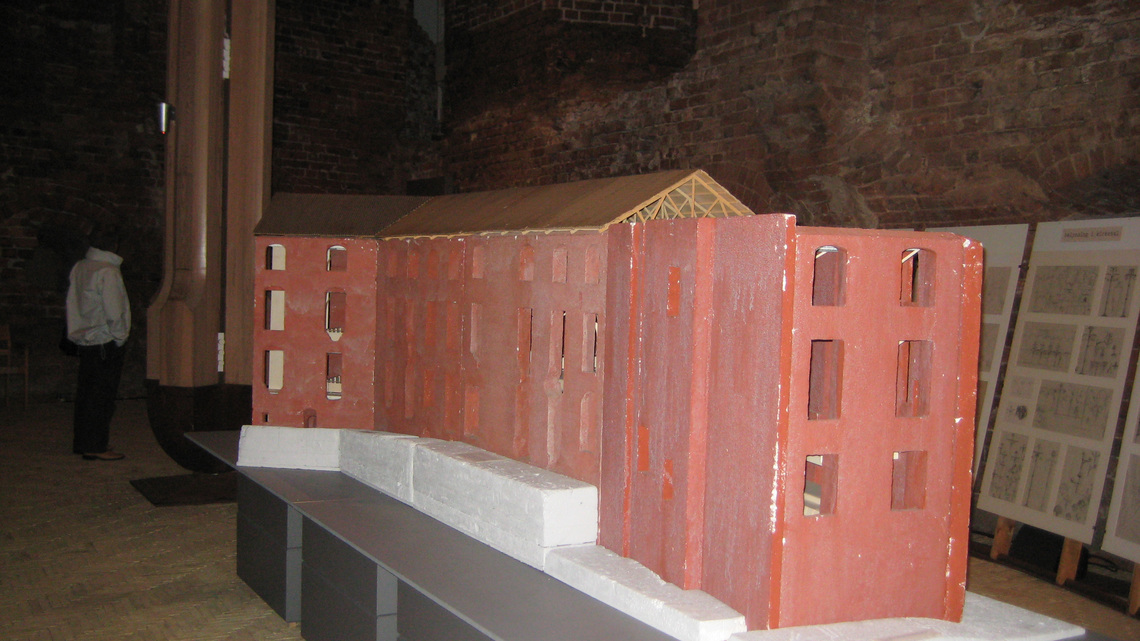
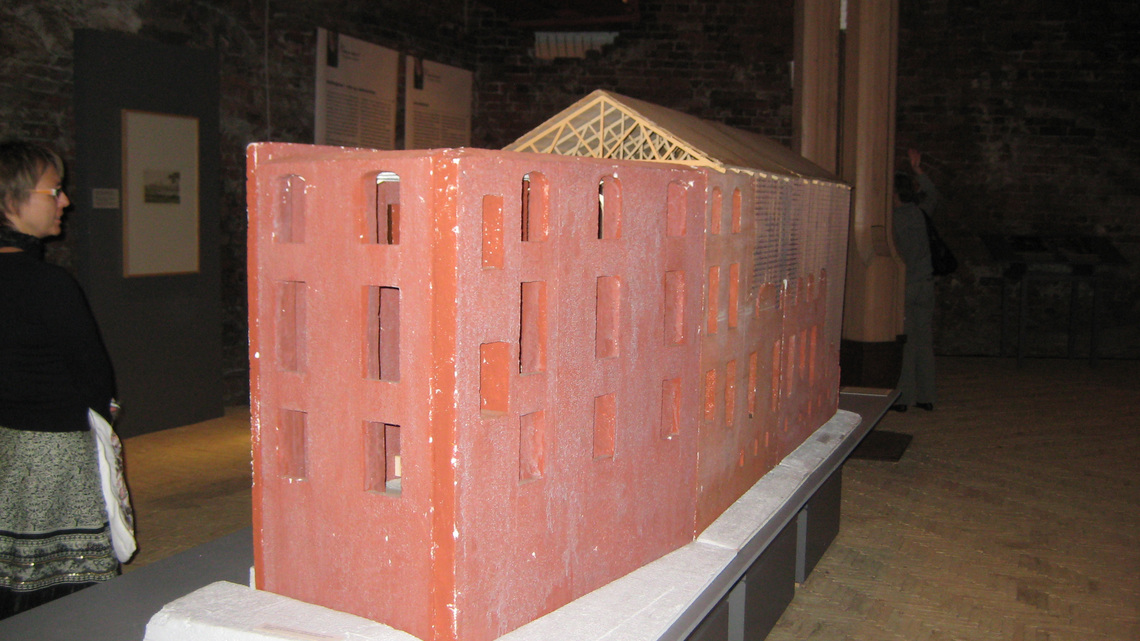
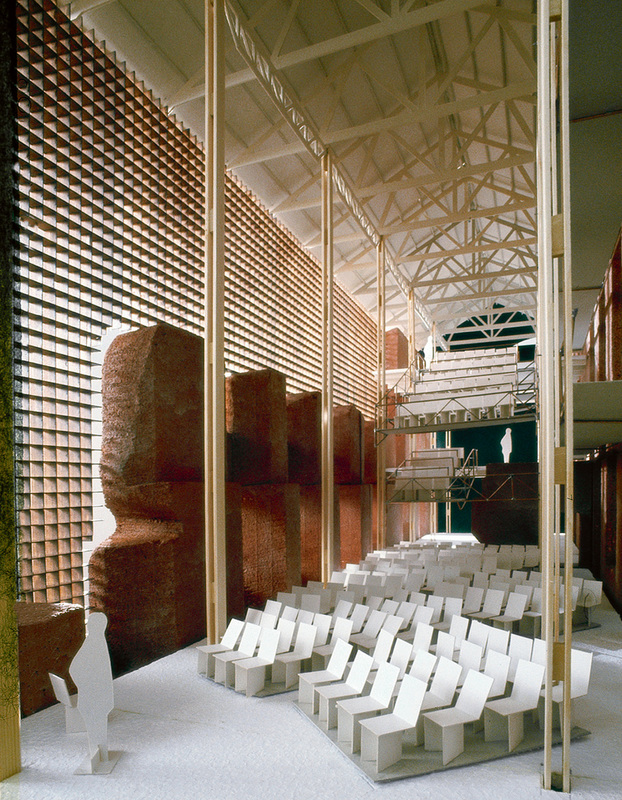
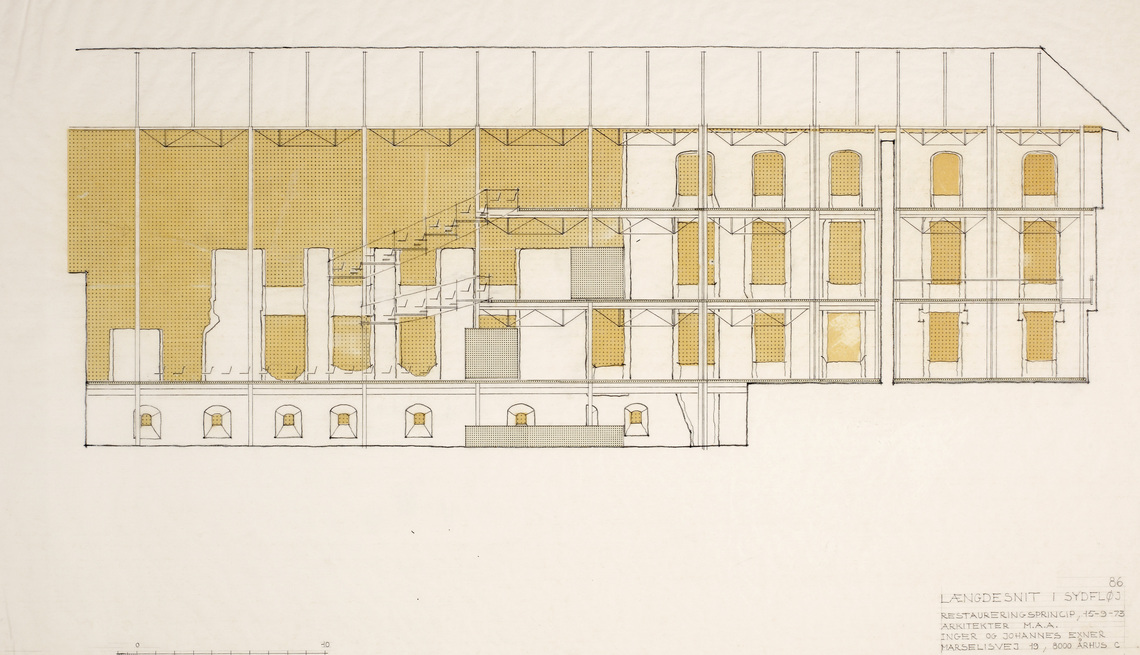
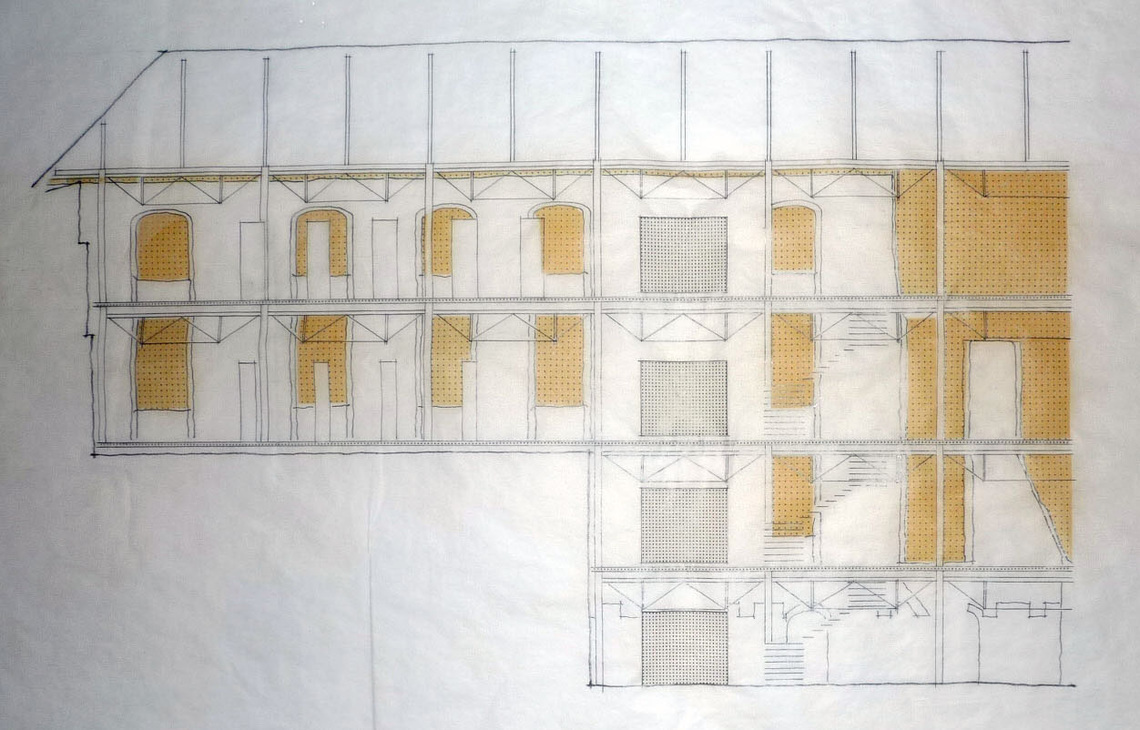
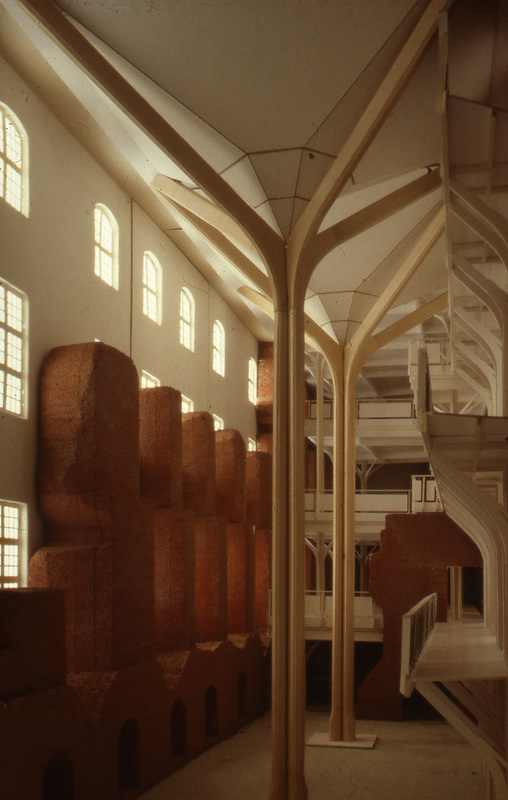
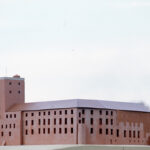
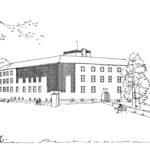
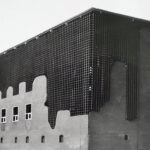
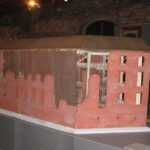
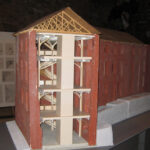
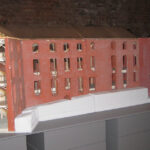
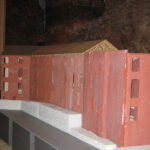
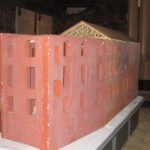
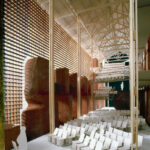
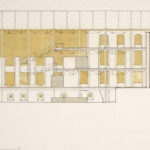
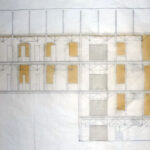
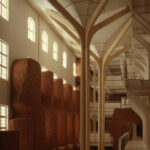
1. proposal Koldinghus “Osteklokke”, 1973.
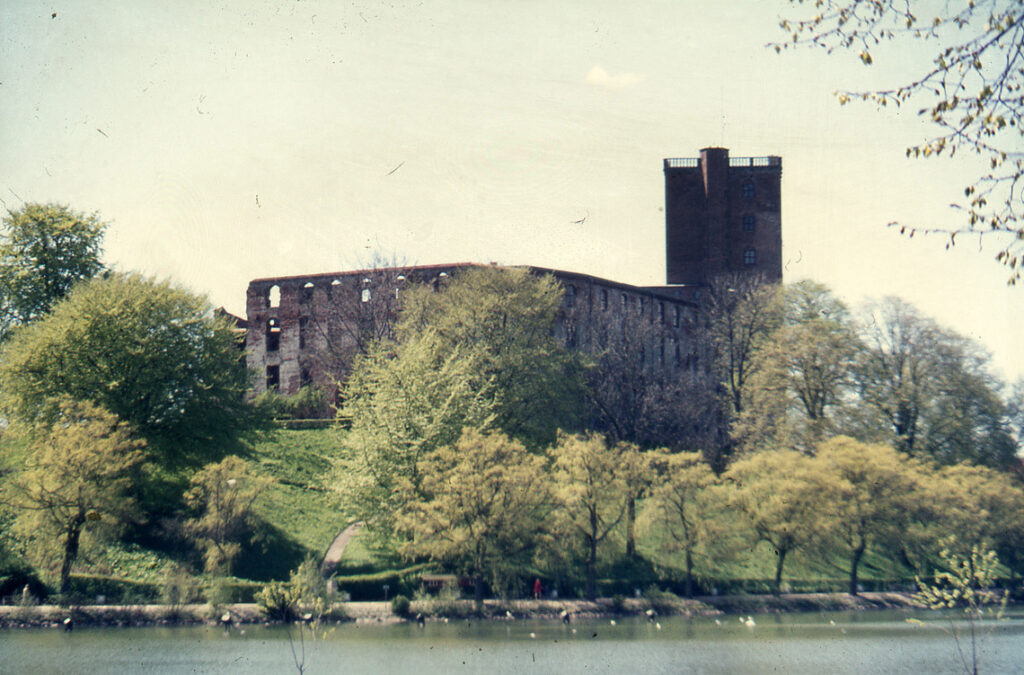
Our principle was, and remains, throughout the entire restoration process, that nothing of the existing ruin, right down to the smallest detail, should be removed.
The first proposal:
The south wing was to remain as a large, undisturbed space, in the form in which it existed.
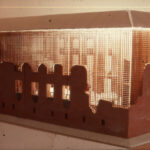
From the inside, the ruin’s walls, with their undulating profile, would be visible against the backdrop of the sky, viewed through a protective, transparent façade surface suspended from the outside, shaped like a gigantic glass and steel grate that closes the large gap in the south-east corner of the castle ruins.
From the outside, in the evening, one would see the ruin’s outline silhouetted against the electric light shining out from within through the ‘grate’ – evoking associations with the ‘burning’ castle.
Two rows of load-bearing steel columns, free-standing from the ruin walls, with load-bearing longitudinal girders. A simple roof made of modern, lightweight sheets, a shallower roof pitch, and a more raw look than the final result turned out to be.
The proposal was met with protests from all sides.
Museum Director Sigvard Skov opposed it both verbally and in writing.
The local press, and many daily newspapers across the country, criticised it and described it as a ‘cheese dome’ .
Worst of all, the authorities – the Heritage Agency, the Special Building Inspection Board and the National Museum – refused to approve it.
The Chief Conservator, P.V. Glob, had sworn that our proposal would never come to fruition.
The only support we received was from the building committee, which had followed the project’s development and understood it.
The people wanted either a restored CASTLE or a RUIN